

Defending Creative Marketing
Atit Shah
Published July 13, 2026

Atit Shah has been dreaming up transformative brand experiences for companies like American Express, Delta Air Lines, Converse, L'Oréal, The New York Times, JennAir, NBC, and Vevo since the early 2000s. As the chief creative officer for Digitas North America, he drives activations born out of the fusion of creative, media, data, and technology.
Atit's unique expertise lies in creating large-scale brand platforms around authentic passions—music, film, philanthropy, fashion, sports, and beyond—that spark mass action. Some of his team's notable projects include the 'Small Business Saturday' movement for Main Streets, the 'Symphonologie' artificial intelligence-born Louvre exhibition, the 'UnTasty Dishes' recipe ambush for Charity Water, and 'The Sync Show' Twitter-powered concert starring Jay Z.
His work has received top honors from the industry including Cannes Grand Prix Lions, Grand Clios, D&AD Pencils, Gold and Silver One Show Pencils, Gold Effies, Webby Awards, and London International Awards.
Q> What does creativity mean to your brand?
Atit> At Digitas, we create Networked Experiences: brand worlds that come alive across story, product, community, and commerce in ways that are designed to help, entertain, even delight. Rather than relying on the age-old "if you build it, they will come" mindset or sprinkling one-off ads in the feed, we work with partners and communities to create ideas that keep growing. We're designing for Year 10, not just Year 1.
Our creativity has to keep expanding to make it all real. With the recent launch of Digitas Pictures, we're working with top creator and directorial talent to develop feature-length films and episodic series for premium streamers like HBO Max and Hulu. With S.W.A.T., our "Share Worthy and Trending" social practice, we're reimagining thumb-stopping content and shoppable experiences that are truly fan-led. And even when we're developing campaigns for the Super Bowl or the small screen, we look for ways across platforms to make every brand moment feel more dimensional and participatory.
Q> And more broadly what does creativity mean to you—outside of work, outside of the sphere of advertising and marketing?
Atit> For me, cultivating creativity outside of work is about wilful detours, breaking my own preference loops. I love Little Free Libraries, those book-swap boxes you stumble upon in NYC and across the country. By design, they're free from algorithms, and the origins of these books are a mystery. Was this paperback left here by an academic as an act of unneighborly good? Someone changing cities? A divorced couple shedding baggage? I'm always looking for something outside of my usual likes. Recently, I found a copy of Artful by Scottish author Ali Smith. It entirely warps genres; part ghost story, part literary criticism, part chronicle of lost love. My copy is mysteriously lived-in, stuffed with someone else's Post-it notes and scribbles in the margins. It's a gem I never would've been served up by a recommendation engine.
Q> What was the moment or experience in your career that really helped ferment the importance of creativity in marketing?
Atit> My humble start in creative was as a junior copywriter working on direct mail and early digital. I can't tell you how much my team sweated the teaser copy and key visuals on the outside of a #10 envelope or the hook of the opening paragraph of a chairman's letter. So many of my senior peers were word maestros, long-form sculptors armed with The New York Times Manual of Style and Usage, and paper craft aficionados. I learned a lot about how honing even the tiniest details of your craft and getting creative about your sell within a very tight set of parameters could lift open rates and make business impact.
The canvases and opportunities have expanded a lot since my junior creative days, but that moment was a boot camp in creative discipline and audience understanding that I would never trade away.
Q> What have you learned is the key to nurturing fruitful relationships with your creative partners?
Atit> For modern creative relationships to thrive, generosity is key. You can't hoard the best thinking off in a cave if you want it to take on a life of its own. You have to be generous with ideas, with credit, and with creative control in service of the best work possible. When we work with creators, publishers, and production partners, we're always asking what they uniquely bring to the craft, and how they'd build the audience in a way we can't.
Digitas Pictures has taken off by making space for outside voices: Academy Award-winning directors, pop-culture disruptors like the Hot Ones creators, powerhouse production companies like Shondaland. For Sephora, we've helped create more shared value between multicultural creators and founder-led beauty brands on TikTok. These are just some of the ways generosity is raising the bar on our work.
Q> Which creative campaigns from other brands (past or present) have inspired you most in your career and why?
Atit> Taking it way back, I was a big fan of Domaination for Converse. It nailed the idea that data, in this case around the timely search patterns of teens, can be used to show real heart and build community. And the lo-fi sensibility was so endearing.
'The Truth is…' campaign series for The New York Times was a landmark in storytelling for me. Through words, mixed media, and the percussion of the journalist's keyboard, it forces you to stop and consider how heroic an act it is to bring accuracy to the news.
One of my favorites from the past couple years is Vaseline Verified. It masterfully shines a light on the role creators play as guardians of brand legacy. Jealous of that one.
Q> What campaign that you've worked on has been the most creatively satisfying and why?
Atit> I've been lucky to work on a lot of great creative puzzles, but one of the most energizing eras of my career was serving as creative lead on the American Express account. We had a higher-order sense of 'why' behind the work: shifting Amex from a badge of status to a catalyst for community involvement. And we were doing it at a moment when experimentation at scale across media and digital platforms was truly possible.
It wasn't one campaign so much as a succession of enduring platforms, from the creation of Small Business Saturday, which still drives billions of dollars to Main Streets, to Unstaged, a live-streamed music series that brought top artists and directors together and let fans participate worldwide. I'll never forget the spirit of invention and partnership that seemed to permeate every hallway during that time.
Q> In what areas of marketing are you seeing most the exciting potential for creativity?
Atit> We're using AI in ways that are genuinely additive to strategy and craft, but there is a counterforce at play: a great longing for the human feeling, for the sense that a person was here. We're seeing delightfully absurd ideas breakthrough in social, a resurgence of handcrafted-ness in storytelling, and nostalgia-inducing sensorial experiences designed to be seen, touched, smelled, and heard. That tension can be perplexing to navigate at times, and it's also incredibly exciting.
Q> You must see so many ideas pitched to you—and have had to sell in so many ideas to the rest of your company. So, what’s the key to selling a great idea?
Atit> The key to selling a great idea is listening. Listening for clients' true ambitions, their fears and anxieties and pet peeves, and the moments when they actually light up when talking about their brand. The opportunity is often somewhere outside of the lines of the written brief. Selling a great idea isn't an act of robbery, sneaking something past a client; it's an act of giving. And to give well, you have to know your audience well.
Q> How do you encourage creative excellence among your team?
Atit> To help teams unlock excellence, I see leading as being an orchestrator of energies. Doing work entirely off brief or beyond the client's ability to sell through the organization? Wasted energy. Protecting that one detail of the design craft that has the Associate AD on your team swelling with pride and feeling fully invested? Good energy. Being a helicopter parent of young ideas? Bad energy. Creating shared moments for strategy and creative in the early days of an assignment to "not know together," to soundboard early thoughts without the pressure to be right? Good energy.
Being a creative is a deeply personal profession, ridden with excitement, passion, ego, insecurity, and doubt. It's often a long road to get the work right, even when done at breakneck speed, and so you want the team energies to be protected.
Q> The big question. We know creativity is effective but when you're assessing an idea that's totally original and new, how do you figure out if it's brilliant or indulgent?
Atit> As I said earlier, great ideas, the brilliant ones, first and foremost should feel like a gift to the brand vs. a self-serving act. In a sentence, you should be able to explain why your idea is a gift. Does it help reclaim something amazing about the brand that was there all along? Does it make over the brand's social presence as a place you always want an invite to? If you can't articulate it like a gift, it probably has the wrong motives at heart.
Q> Tell us about a time you've really had to fight for a creative idea. What was the idea, what was the obstacle, and why was it worth it?
Atit> Defending creativity has always been part of the job. While there have been several key showdowns throughout my career, moments where I gave a CMO courage or 180'd the sentiment in a pitch room, most of the time, being a guardian of great work is the act of a million micro-moves by a whole cast—reshaping a turn of phrase in the strategy wind-up, texting a client a teaser the day before, sprucing up the deck template design, finding an odd but really validating audience insight, surgically shedding production costs—vs. one soloist's single act of bravery.
I think back to an award-winning platform we created for Whirlpool's flagship luxury kitchen brand, JennAir, called 'Bound by Nothing,' centered on an escape from blind followship in the world of luxury in pursuit of progressive design. From visceral films to theatrical experiential events to trade show exhibits that were more art happening than cooking demo, we were taking detours at every turn from the category. And there were a lot of pockets of client apprehension and some conservative naysayers. But we built a groundswell of coalition, ultimately leading to double-digit sales growth for the brand.
Q> What one piece of advice do you have for marketers at the beginning of their careers who are still figuring out how to drive impactful creative marketing?
Atit> It's who you start with that matters. Be picky about the band of people you begin your journey with. If I hadn't been surrounded by kindness and tough love, if I hadn't been in awe of leaders' intelligence, if I hadn't felt psychological safety in the rooms I entered, the permission to ask and poke and build without humiliation, I'm not sure I'd have had the passion and endurance for the lightning-fast changes and volatility in marketing today. But with the right crew, you can do anything.
This Q&A was originally published on Little Black Book.
-
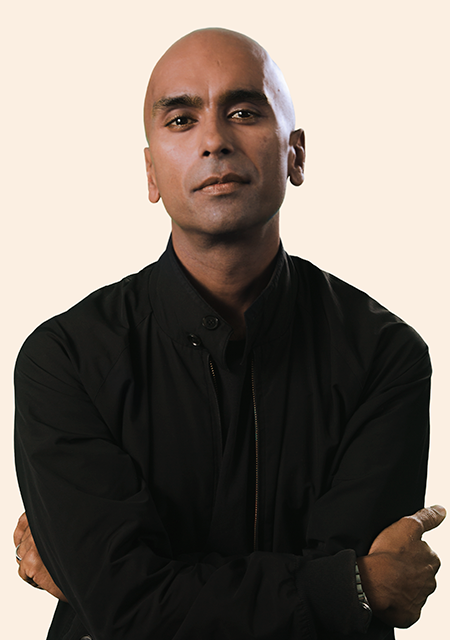 Atit ShahChief Creative Officer