

AI everywhere, but creativity intact: Agencies reflect on a ‘bonkers and brilliant’ 2025
Published December 23, 2025


If 2025 was the year marketing learned to live with AI, 2026 will be the year it decides what to do with it.
With “AI slop” named the Macquarie Dictionary’s ‘word’ of the year, marketers are grappling with whether automation helps them do more with less or just create more noise.
Naturally, agency leaders reviewing 2025 were all eager to point out that creativity, not mere output, is the true differentiator, but also admitted that AI is well and truly here to stay.
Accenture Song ANZ marketing practice lead and CEO of Droga5 ANZ Matt Michael called AI the “main workbench at work and play,” while Digitas CEO Davy Rennie added: “AI. It’s not just a thing; it’s in everything that we do.”
Using it effectively leaves no room for half measures in 2026, Rennie argued: “Go big, get bold, use all the tools that create an advantage, automate the tasks that should have been automated decades ago.
“Demand outcomes, not bodies. Tell stories that make people feel. And for the love of all things great, be creative.”
Rennie’s bold mandate is inspiring, but easier said than done when the technology itself is essentially a remix of everything that’s come before.
For Michelle Holland, Ogilvy’s managing director for Sydney and Brisbane, the challenge in 2026 will be turning AI from experimentation into everyday infrastructure.
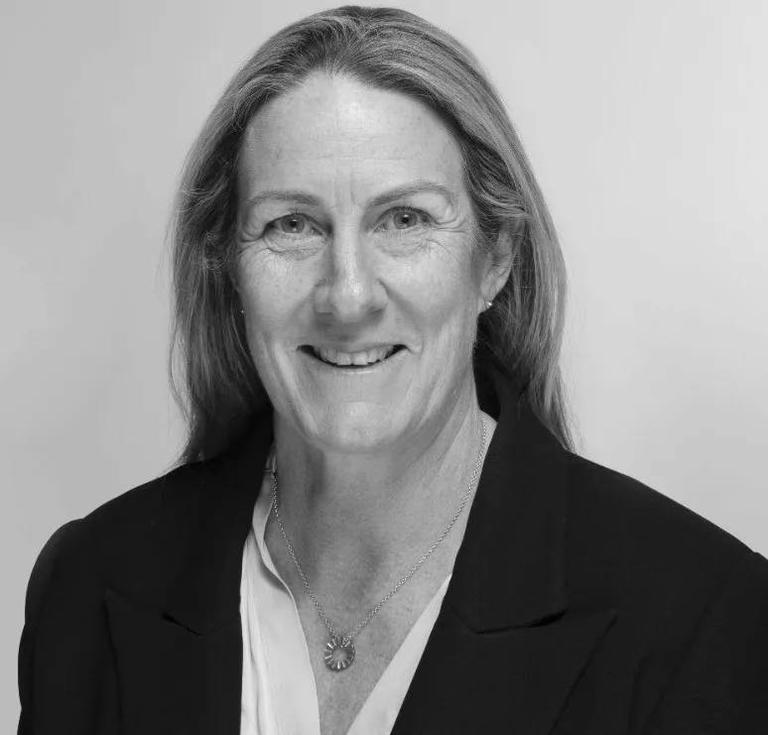
“But here’s the paradox,” she said. “As technology accelerates, consumers will demand more human connection, not less. The winners will be brands that deliver ‘smarter marketing with more heart’: hyper-personalised experiences that still feel authentic and emotionally resonant.”
It’s a challenge, nevertheless, that BMF’s CEO Stephen McArdle is eager to rise to.
“[AI] will force us to further prove out the value of creative brilliance,” he said. “There’s far too much mediocrity out there that is happily ignored by the folk we’re trying to attract. It’s why Adam Morgan and Peter Field’s ‘the cost of dull’ will gain further traction.
“But rather than catastrophise, 2026 is the time for creativity to rise. As Nils Leonard recently put it when championing D&AD: “Don’t confuse shit ads for the death of creativity.”
“Smart beats scale”
Even as WPP Media reported a 5.2% rise in Australia’s ad market to around $28 billion, marketers and agencies seemed to spend 2025 grappling with uncertainty, pressure and constant budget cuts.
If not the whole story, Guideline SMI’s recent “Red October” report, showing a 14.7% year-on-year decline, seemed to capture the industry’s mood more accurately.
While Howatson and Co general manager of media James Turner said the agency had, overall, seen increased spending among clients, 2025 was “marked by volatility”.
This, he said, was driven by shifts in the economy, US tariffs, evolving local legislature, the rise of AI-powered media buying and a changing content landscape — “all of which influenced how budgets were deployed,” he said.
“Our challenge is for clients without large-scale media or production budgets,” he continued.
“How do we create momentum? If you’re mass market, that’s a media challenge that we’re increasingly solving either by audience, data or category nuance leveraging a principle of smarts beats scale.”

However, Turner also noted that “across the board, we are seeing brands that invest in creativity and culture are paying much larger market share dividends than brands chasing short-term media performance outcomes.”
Jake Cush, group chief commercial officer of independent agency IMA B2B, argued that while brands were active across lots of channels, they “struggled to build momentum”.
In B2B marketing, where decisions can be slow, involve multiple stakeholders and are shaped by trust, reputation and long-term visibility, this was a challenge.
Affinity CEO Angela Smith also recently articulated this in a piece for Mumbrella, writing: “Budgets [are] spread far too thin. Brands are touching a variety of platforms, but effectively diluting their message.”
On an optimistic note, however, Cush noted: “We’re seeing growing traction from long-form content, video, events and strong sales enablement content, tools that help buyers understand complex offers and help sales teams have better conversations.
“The brands winning are the ones showing up clearly and consistently, not just when they need leads.”
Spending wasn’t the only issue shaping the media agency landscape.
Transparency, particularly the controversial practice known as principal media, sparked debate throughout the year. The spotlight on principal media was further intensified by a US lawsuit against WPP.
Trinity P3 consultant Stephen Wright wrote of the issue in April: “Principal media is good or evil. The real question is whether it’s a saviour or false messiah, and who really benefits.”
Omnicom Media Group Australia’s new CEO Kristiaan Kroon also waded into the debate during a panel session for Mutinex, arguing that “bundled media” — or inventory packages that mix formats, channels and ad products — are a “bigger problem for customers.
However, Droga5 ANZ CEO Matt Michael is confident the industry is heading towards more clarity.
“Sunlight will be the disinfectant on media transparency,” he said. “The by-product of principal approaches, the opacity of margin and agency effort, will give way to transparency and the ‘black box’ of media buying will begin to open up, building more trust and accountability.”
Extreme and extraordinary
Perhaps the biggest story of the year was the closure of Omnicom–IPG Mediabrands, which, while bringing an end to a period of disquiet and uncertainty, left agencies navigating closures, job losses, and structural reshuffles across the network.
Globally, DDB was retired and folded into Clemenger BBDO in Australia, with DDB Melbourne and Sydney leaders Mike Napolitano and Sheryl Marjoram taking over as co-CEOs of the consolidated entity.
Less headline-grabbing but no less significant, WPP quietly retired its GroupM brand in Australia to launch the consolidated WPP Media.
Anecdotally, agency leaders say more consolidation is expected on the horizon in 2026, as holding companies continue to streamline operations and align teams.
For Rennie, these changes signal key shifts across the industry:

“The death of FTE retainer models. The rise of outcome-based retainer models. The death of the T-shape. The rise of the M-shape. Increasing demand for efficiency. Increased demand from strategic and creative leadership.”
In other words, agencies, he argues, are moving away from single-speciality experts with broad general knowledge – or T-shape — towards multi-skilled professionals with several areas of expertise, known as an M-shape.
BMF CEO Stephen McArdle offered a more colourful vision for 2026, describing it as a year of “extremes and extraordinary things — one of the bonkers and brilliant,” he said.
“Born of the excitement and experimentation that continues with the tech takeover and the fear and anxiety that goes hand-in-hand with the unknown and complex.
“2026 might be brutal; it will certainly have a healthy dose of hustle, require a few deep breaths, and I’d imagine it will have more than its fair share of soul searching. But it will also be brimming with belief and bravery.”